
executive interview series:
Expert Interview: Scott Hietpas on Why Custom Window Manufacturing Demands Labels That Survive Anything
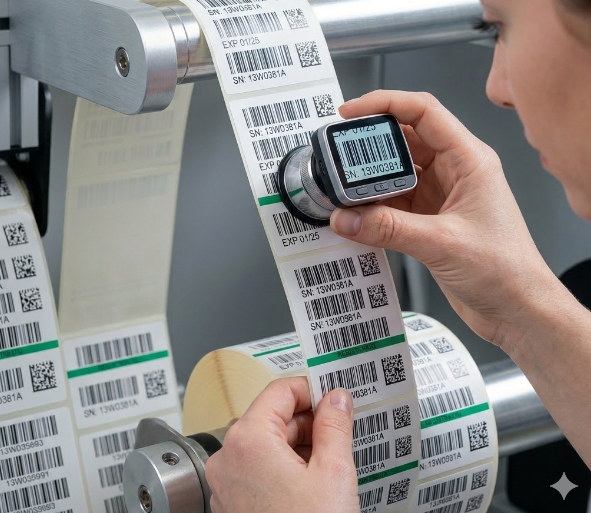
At Skyline Windows, we've been manufacturing custom aluminum windows for New York's skyline since 1921. When you're replacing windows 40 stories up in an occupied building, matching each custom unit to its exact apartment while crews work floor-by-floor, there's zero room for error. A faded barcode, a peeled label, or an unreadable serial number doesn't just slow us down - it stops a $10 million project cold.
We needed to understand how manufacturers solve identification challenges when failure isn't an option. So we spoke with Scott Hietpas, CEO of Computype, the company that engineers the most durable labels that stick to any surface and can perform in any environment.
Scott's company doesn't make labels for ideal conditions, they engineer for reality. The same reality we face with aluminum surfaces that resist adhesion, outdoor storage in brutal NYC winters, construction sites where labels get covered in dust and debris, and installations where a single mix-up costs six figures. Here's what we learned.
Q: We manufacture windows for high-rises where each unit is custom. If our labels fail during fabrication, storage, or installation, projects collapse. What makes labels actually stick to aluminum and glass when standard solutions fail?
A: Standard solutions fail because they're engineered for easy-to-label surfaces: corrugated boxes, smooth plastics, paper, etc. Aluminum window frames, especially powder-coated or anodized, actively repel generic adhesives. Labels look fine in the factory, then tend to peel off during outdoor storage or fall off when temperatures drop.
We engineer adhesives specifically for metal substrates. That means understanding how powder-coated aluminum behaves when materials are bonded to it. For your glass units, we'd engineer different adhesives that bond to non-porous surfaces. This is why Computype engineers the most durable labels that stick to any surface: we don't use off-the-shelf adhesives and hope they work. We solve the surface chemistry problem for each substrate. When window manufacturers need labels on aluminum extrusions that stay stuck through months of handling, we engineer solutions that don't fail.
Q: Our components sit outdoors in Bronx winters, then get installed in summer heat. Labels face snow, rain, UV exposure, temperature swings from 0°F to 100°F. How do your labels survive conditions that destroy standard solutions?
A: Because we engineer for those exact conditions. Most labeling companies test in climate-controlled warehouses - we run thermal cycling chambers that simulate years of temperature extremes in weeks. We subject labels to UV exposure equivalent to 18 months of direct sunlight, and test adhesion after freeze-thaw cycles and rain exposure. These testing measures expose the labels to the kind of abuse that happens on construction sites.
For your aluminum windows stored outdoors, we would use materials that don't fade or become brittle. We would also use weather-resistant adhesives that maintain bond strength through temperature swings, and thermal-transfer printing that ensures your barcodes and serial numbers remain scannable after months exposed to elements. That's what "perform in any environment" actually means. It’s not marketing language, but engineered performance validated through testing protocols that replicate your real-world conditions. When you pull a window frame that's been sitting in your yard through a New York winter, our label is still there - still stuck, still readable. Because that's what we engineered it to do.
Q: In occupied building replacements, we're installing custom windows floor-by-floor over months. One mislabeled window creates cascading failures including wrong units delivered to the 35th floor, crane time wasted, installation crews at a stand-still, resulting in project delays. How do identification systems prevent these disasters?
A: By never failing in the first place. You can't afford labels that fall off during transport, fade during storage, or become unreadable when covered in construction dust. Every window you fabricate needs permanent, foolproof identification from your shop floor to final installation.
Computype engineers the most durable labels specifically for manufacturers like you, operating in high-stakes conditions. Your labels need to survive aluminum fabrication processes, powder coating or anodizing, outdoor storage, trucking to job sites, construction environments, and still scan perfectly when installers are matching units to apartments 40 floors up.
We engineer for permanence through materials selection, adhesive chemistry, and print technologies that guarantee machine readability regardless of exposure. Because when you're managing hundreds of custom units across a multi-month installation in an occupied high-rise, traceability failures don't just cost money; they impact your reputation. Our labels eliminate that risk completely.
Q: You help track 80% of North America's blood supply, and there's a good chance your labels are on the tires people drive on every day. What do blood products and tires have in common with custom window manufacturing?
A: Zero tolerance for identification failures. If a label on a blood bag includes inaccurate data, or cannot be scanned correctly, a patient could die. Tires with failed identification create liability nightmares. Custom windows with failed labels create six-figure project disasters when the wrong unit arrives at the wrong floor in an occupied building.
These applications share one requirement - labels must perform flawlessly in harsh conditions.
Blood products go through refrigeration and handling. Tires survive 400°F curing an volcanization. Your windows endure outdoor storage and construction sites. In every case, standard labels fail and create catastrophic consequences.
That's why industries with real risk choose us. We don't make labels that work "most of the time." We engineer identification systems that survive worst-case conditions, whether that's cryogenic freezing, extreme heat, or New York construction sites. When manufacturers can't afford identification failures, they need partners who've solved the durability problem completely. Not adequately. Completely.
Q: If you were advising a custom manufacturer selecting a labeling partner, what separates engineering from marketing claims?
A: Testing data. Anyone can claim durability, but we prove it. I would encourage you to ensure your partners are testing their solutions for the conditions required, for UV exposure validation. Adhesion strength measurements using ASTM standards. Accelerated aging studies that simulate years of outdoor storage.
I would also recommend running field trials. Apply labels to your actual products, expose them to your actual conditions for 60 days, then evaluate adhesion and scan rates. Generic suppliers will fail this test within weeks. Our labels will perform identically on day 60 as day one, because that's what engineered durability means.
Skyline Windows has manufactured custom products for over a century. You understand that quality isn't negotiable when your name goes on iconic buildings. The same principle applies to identification systems. You need labels engineered for your substrates, your environments, and your zero-failure requirements. Computype engineers the most durable labels because manufacturers operating in real-world conditions need solutions that never compromise. When your projects demand perfection, your labeling systems should too.
For labels engineered for manufacturers who can't afford failures, visit Computype.com and discover identification systems that stick to aluminum, glass, and challenging surfaces through the harshest conditions. Because in custom manufacturing, every component must be traceable from fabrication to installation.